Home
Welcome to the Huntley Project Museum. We want to thank you for visiting our website and hope that it will encourage you to come and visit us in person.
- 770 Railroad Hwy Huntley, Montana 59037
- Hours of Operation Tuesday-Saturday 10am-4pm,
- 406-348-2533
♦NEW♦- Check out the new gift store at the HP Museum.
—————————————————————————————–
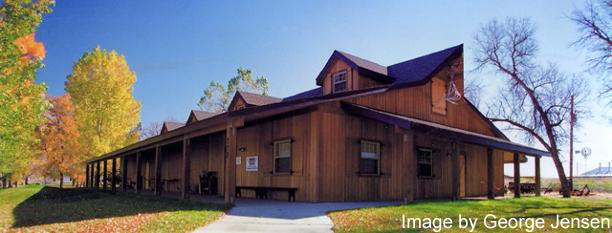
* The Huntley Project Museum of Irrigated Agriculture tells the unique story of homesteaders who transformed this valley from prairie to farmland. Under the Reclamation Act of 1902, the Huntley Irrigation Project was one of the earliest and most successful. The museum offers a 7000 square foot building with displays relating to farming, ranching, and homesteading during the early 20th century. Also, take the time to enjoy our developing town and homestead sites. With the help of a grant in 2012 the museum now offers a walk back in time. Visit a schoolhouse, tar paper shack, early 1900s log cabin, 1910 homestead house, carpenters shed, milking barn, doctor’s office, and bank. The museum strives to maintain and preserve the unique history of the Huntley Project; we hope to see you soon!
